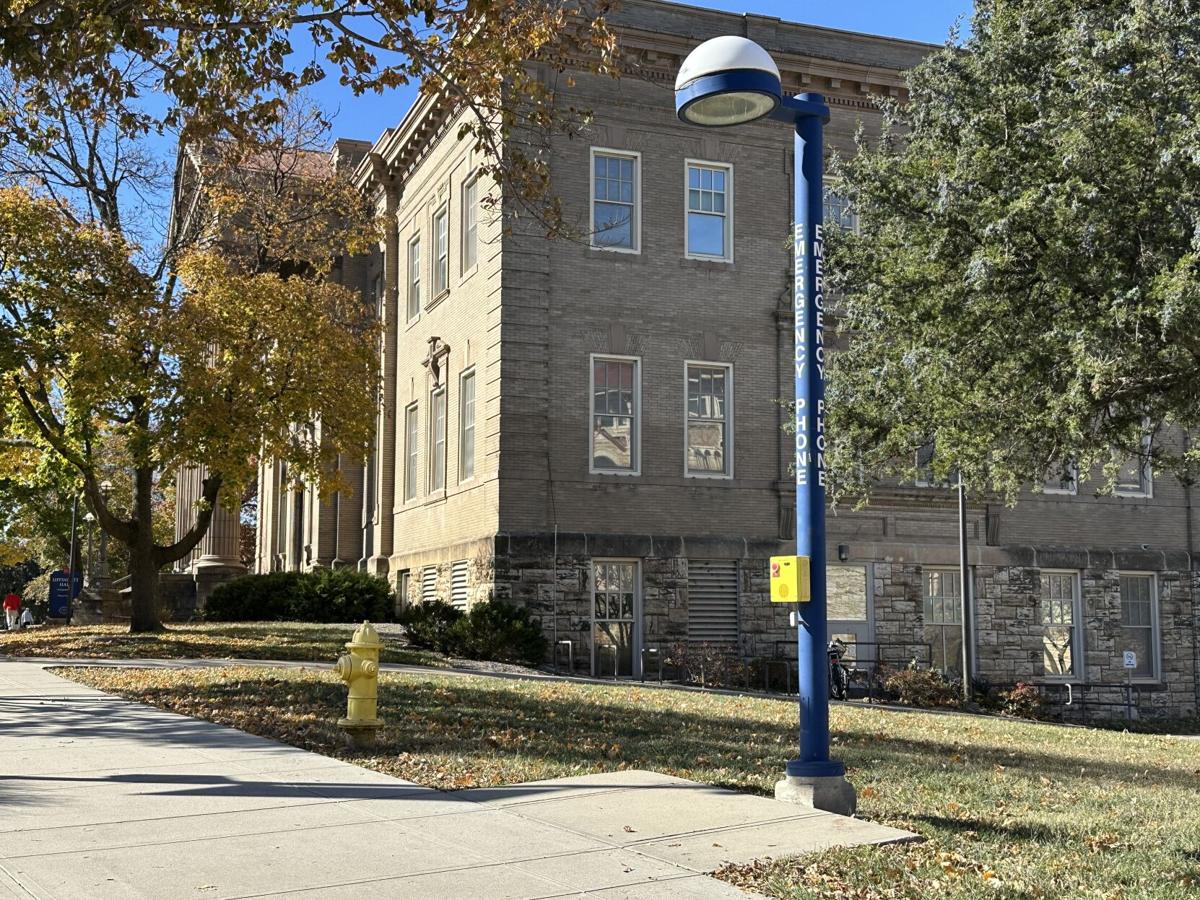
Jill Hummels noticed in KU Police daily reports that emergency blue light phones were frequently being activated even when there was no emergency or caller present. A Jayhawks Elevate review of emergency phone activity found that nearly 98% of activations were prank calls or accidental activations. At the same time, KU was incurring ongoing costs for police responses, weekly system testing, repairs, and replacement infrastructure for an increasingly outdated campus safety solution.
KU Police, KU Information Technology, Operations, the Office of the Provost, and other campus stakeholders worked together to evaluate phone usage, costs, safety considerations, and the infrastructure needed to support the system. The proposed decommissioning was also discussed with Student Senate, which raised no major objections to moving forward.
Because more than 98% of individuals ages 18–29 have access to a cell phone, and 911 calls made on KU’s campus route directly to KU Police Dispatch, calling 911 from a cell phone is often a more effective way to request help than locating the nearest blue light phone.
After this review and engagement with campus stakeholders, KU began decommissioning the emergency blue light phones during summer 2026. Removing the outdated system reduces unnecessary testing, repairs, and police responses to accidental or prank activations, while allowing officers and university resources to be redirected toward higher-value campus safety activities.
Fellow Change Agents:
• Jill Hummels
• Nelson Mosley
• Jim Rupprecht
• TJ Droge
• Paul Gulotta
• Kevin Mies
• James Druen
• IT Network Technicians Team
• Christopher Blackman
Impact of idea:
- $8,700 annually in documented efficiency and maintenance savings, including approximately $5,850 associated with 234 hours of annual KUPD testing time and $2,850 in annual KUIT repair costs.
- Additional operational benefits include reducing police responses to prank and accidental activations, allowing officers to remain available for other calls and campus safety activities.
- Thousands of additional dollars will be saved by reducing the number of analog gateways being purchased in upcoming years