Your Ideas Matter
Jayhawks Elevate is successful because of you. Your ideas make us better. Below are some examples of processes being improved by your peer's ideas. Check out changes being made. Perhaps you have an idea to submit too!
Course and Grant Release Workflow
When an IPSR Associate Director, Jena raised concerns about the course release approval process, she highlighted a challenge that many departments were experiencing. Requests often required lengthy email chains between faculty, department chairs, dean's offices, and administrative staff, with inconsistent workflows and limited visibility into where approvals stood.
Rather than accepting the inefficiency, Jena brought forward an idea to create a more standardized and transparent process. Working collaboratively with budget officers, research support staff, and TeamDynamix administrators, the group mapped the existing workflow and designed a solution that would work across units.
The result is a new TeamDynamix request form and automated workflow that routes approvals, sends notifications and reminders, tracks progress, and provides visibility to those involved. By moving the process out of individual inboxes and into a shared system, the team created a more reliable, consistent, and user-friendly experience.
This improvement demonstrates how one person's idea, combined with strong cross-campus collaboration, can lead to meaningful operational change that benefits faculty and staff alike.
Fellow Change Agents:
- Jena Gunter
- Mark Reynolds
- Jessica Johnson Webb
- Heather Abernathy
- Elise Waldron
- Lorna Vazquez
- Derrick Seaton
- Rachel Fehr
- Tanner Grubbs
Impact of idea:
- Releases will be processed faster with fewer delays
- Releases will have a validated and auditable workflow approval process
- Staff will know at any point where the request is and who is responsible for the next workflow step
- Increased transparency for all involved in the request

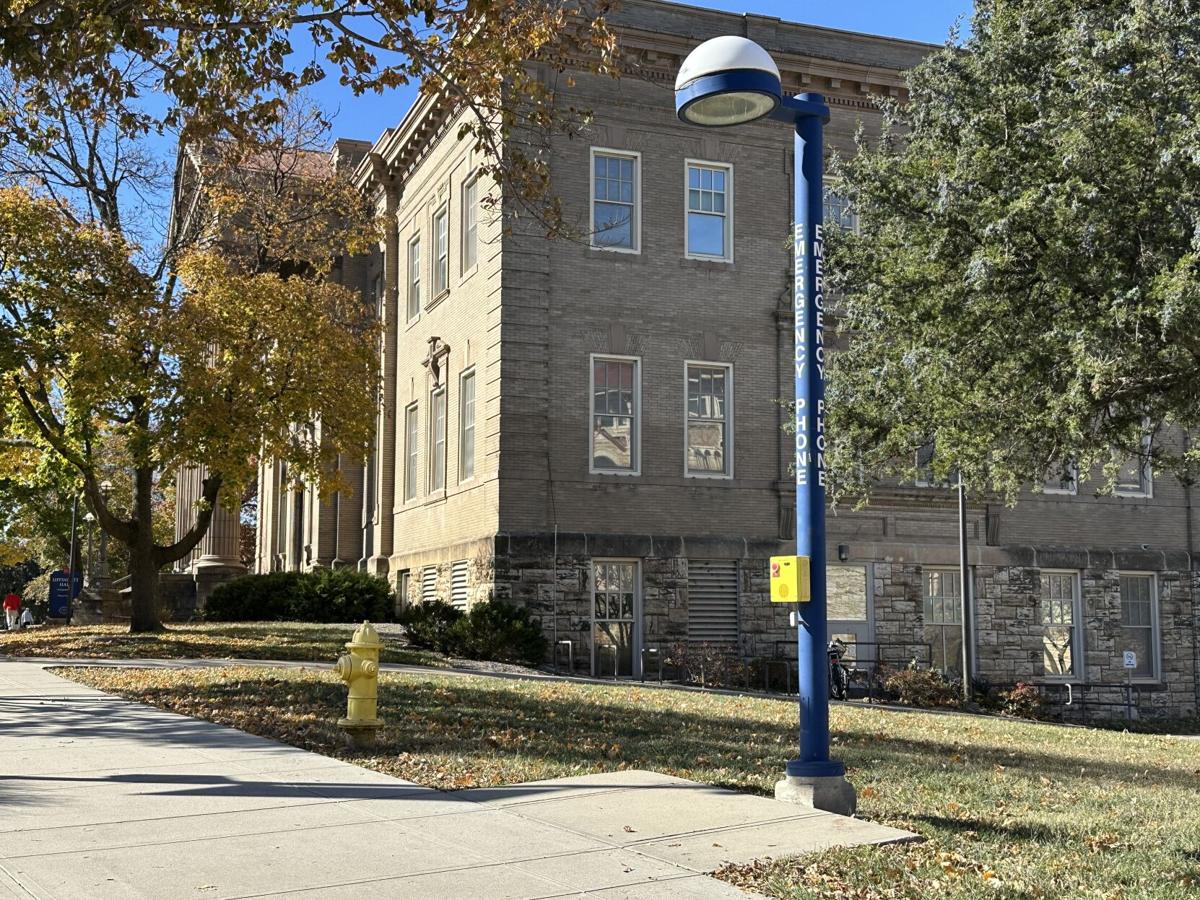
Remove Emergency Blue Light Phone Stations
Jill Hummels noticed in KU Police daily reports that emergency blue light phones were frequently being activated even when there was no emergency or caller present. A Jayhawks Elevate review of emergency phone activity found that nearly 98% of activations were prank calls or accidental activations. At the same time, KU was incurring ongoing costs for police responses, weekly system testing, repairs, and replacement infrastructure for an increasingly outdated campus safety solution.
KU Police, KU Information Technology, Operations, the Office of the Provost, and other campus stakeholders worked together to evaluate phone usage, costs, safety considerations, and the infrastructure needed to support the system. The proposed decommissioning was also discussed with Student Senate, which raised no major objections to moving forward.
Because more than 98% of individuals ages 18–29 have access to a cell phone, and 911 calls made on KU’s campus route directly to KU Police Dispatch, calling 911 from a cell phone is often a more effective way to request help than locating the nearest blue light phone.
After this review and engagement with campus stakeholders, KU began decommissioning the emergency blue light phones during summer 2026. Removing the outdated system reduces unnecessary testing, repairs, and police responses to accidental or prank activations, while allowing officers and university resources to be redirected toward higher-value campus safety activities.
Fellow Change Agents:
• Jill Hummels
• Nelson Mosley
• Jim Rupprecht
• TJ Droge
• Paul Gulotta
• Kevin Mies
• James Druen
• IT Network Technicians Team
• Christopher Blackman
Impact of idea:
- $8,700 annually in documented efficiency and maintenance savings, including approximately $5,850 associated with 234 hours of annual KUPD testing time and $2,850 in annual KUIT repair costs.
- Additional operational benefits include reducing police responses to prank and accidental activations, allowing officers to remain available for other calls and campus safety activities.
- Thousands of additional dollars will be saved by reducing the number of analog gateways being purchased in upcoming years
New Alcohol Service at Events Request Form
Deanna in the Provost Office identified opportunities to improve KU's Alcohol Service at Events request process. The existing process relied on a legacy form and manual routing that could result in incomplete submissions, additional follow-up, limited visibility into approval status, and inconsistent tracking of requests.
The Provost Office and KU IT partnered to evaluate the process and identified TeamDynamix as a solution. A new TDX form and workflow were developed to provide more structured data collection, conditional form logic, approved-location selections, automated approval routing, notifications, requester visibility, and centralized tracking.
The updated process provides a stronger foundation for managing Alcohol Service requests while improving visibility, consistency, accountability, and the experience for those submitting and processing requests.
Fellow Change Agents:
- Deanna Goscha
- Ann Reed
Impact of idea:
- Simplified user experience with automated routing and notifications.
- Centralized tracking for improved visibility, accountability, and auditability.

Supplier Self-Registrations
Many campus partners have expressed concern over the years about the amount of effort involved in getting a supplier setup in our financial system (FITC) to receive payments. Follow-ups about documentation resulted in multiple emails between the SSC, Department personnel, and the supplier which was an inefficient use of everyone’s time. Outside of the inefficiency, departments were hesitant to collect W9 and banking documents because of the sensitive data they contained.
In response to these concerns, Financial Management Systems (FMS) completed a project to launch a Supplier Self-Registrations on 3/31/2026. This feature allows new suppliers to directly register and provide their sensitive data into our financial system rather than passing documents through email. With fraud prevention as a top priority, it was critical that KU put a process in place to protect the sensitive information of our suppliers. Second, along with the suppliers directly self-registering, our supplier management team will now directly interface with the supplier as a central point of contact, eliminating the department as the middle-man in the communications.
Each of these improvements will save many KU team members time and energy getting suppliers in our systems efficiently to allow us to pay them for services they provided. This is a great example of how system utilization can drive significant improvements in service to our suppliers and more efficient use of KU’s most valuable resource, our time!
Fellow Change Agents:
- Judy Hamner
- Melissa Stewart
- Mike Lewis
- Sydney Keizer
- Sarah White
- Karen Schaller
- Deb Carter
- Missy Somers
- Tanner Grubbs
- Penny Anderson
- Nolan Haire
- Luke Raynor
- Caty Movich
- Jamia Bell
- Matthew Farrier
- Nicole Suchy
- Bridget Patti
- Annie Hunt
- Shaundra Droge
- Amy Patty
- Amber Wood
- Mary Sue Sledd
- Zach McElfresh
- Willisha Thompson
- Pam Tso
- Annie Rajaei
- Paul Borchardt
- Teresa Mock
- Katherine Lea
- Marty White
- Robin Richmond
- Charlie McCool
- Donna Hughes
- Caitlin Day Wedel
- Jessica Chilcoat
Impact of idea:
- Quicker supplier setup means fewer delays in paying our suppliers and fewer delays in processing requisitions to start new projects.
- Centralization of the supplier self-registration process reduces the level of effort in the departments by reducing the data entry and document collection currently being done as well as fewer follow-up emails.
- Greater than $50K in efficiency gains annually related to saved time for SSC, Department support staff, and faculty.

Improving Travel Request Guidance
An employee working with travel-related requests noticed that users were frequently submitting documentation through the wrong request types within the Shared Service Center portal. In particular, P-card receipts and other travel-related documents were often submitted through travel request forms that were not intended for those purposes.
The issue stemmed from a lack of clear guidance on the Travel-Related Request page. While other areas of the Shared Service Center portal provide descriptions and explanations for each request category, the travel request page offered limited information to help users determine which option best fit their needs. As a result, staff members regularly had to follow up with submitters to obtain missing information or redirect requests, creating additional work and delays.
After evaluating the request, the team agreed that providing additional guidance directly on the Travel-Related Request page would help users make more informed selections and improve the overall submission process. To address the issue, a new category-and-description table was added to the Travel-Related Request page, similar to the format already used on other SSC service pages. The enhanced guidance explains the purpose of each request type and helps users identify the appropriate submission path before creating a ticket.
The result is a more user-friendly experience that reduces confusion, improves submission accuracy, and minimizes the need for manual follow-up by the Travel team.
Fellow Change Agents:
- Amanda Ostrander
- Jessica Chilcoat
Impact of idea:
- Reduced Incorrect Submissions - Providing clear descriptions for each travel request category helps users select the appropriate request type the first time, reducing misrouted and incomplete submissions.
- Less Manual Follow-Up - Travel staff spend less time contacting users to clarify requests, obtain missing information, or redirect submissions, allowing more time to focus on processing and customer service.
- Improved User Experience - Employees now have clearer guidance when navigating travel-related services, making the process easier to understand and reducing frustration when submitting requests.